

Wire Harness Taping Machines
From fixed splice points to long harness sections, Sedeke offers wire harness taping machines for localized bundling, programmed or continuous wrapping, handheld operation, and tape preparation. Match the equipment route to your harness diameter, tape format, wrapping position, and control requirements—then compare the machines built for that specific task.
Core Selling Points
Start with where the tape must be applied and how the harness moves. A splice that needs several turns at one point requires a different machine route from a long wrapped section. After choosing the task, compare harness range, tape format and control method.
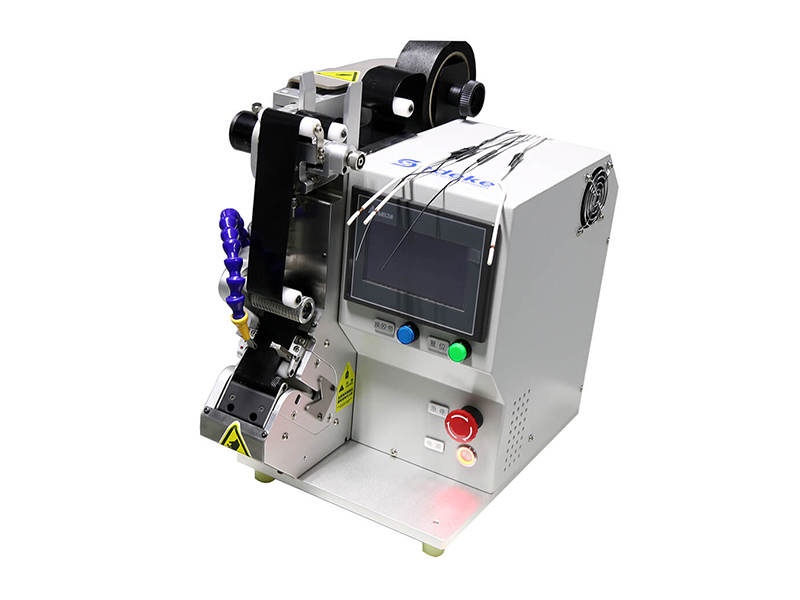
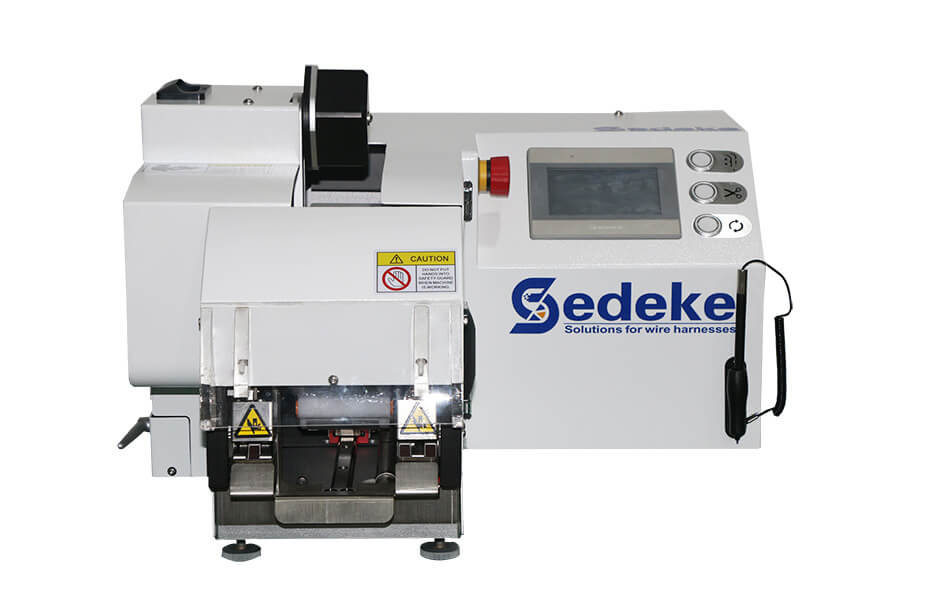
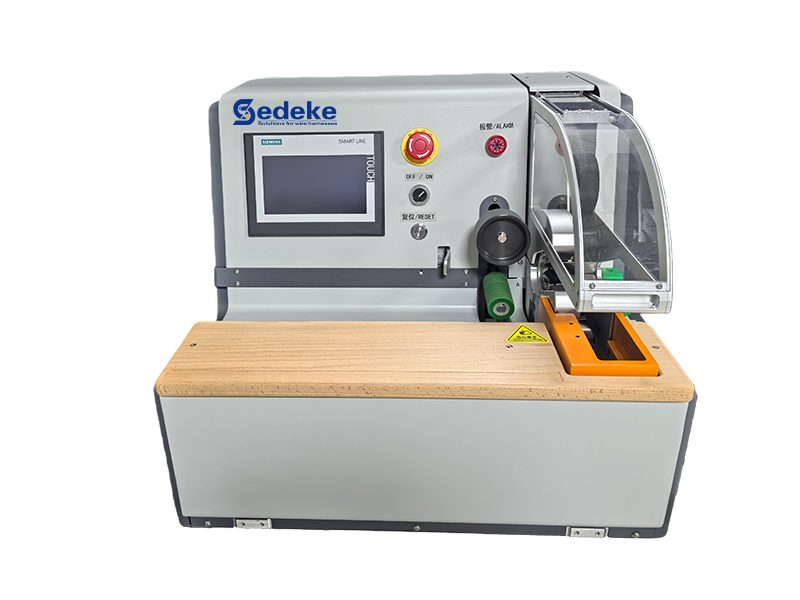
For splices, branches and connector ends, Sedeke’s STB route covers adjustable turns, programmed short wrapping, wider adhesive tape at joints and positioned multi-point bundling. Compare STB-10, STB-30, STB-55 and STB-60 by workpiece, tape width and required motion.
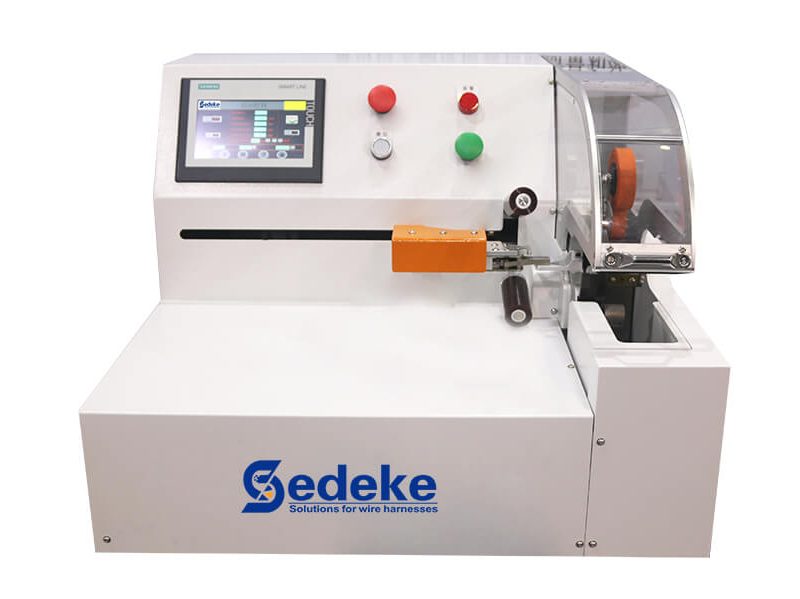
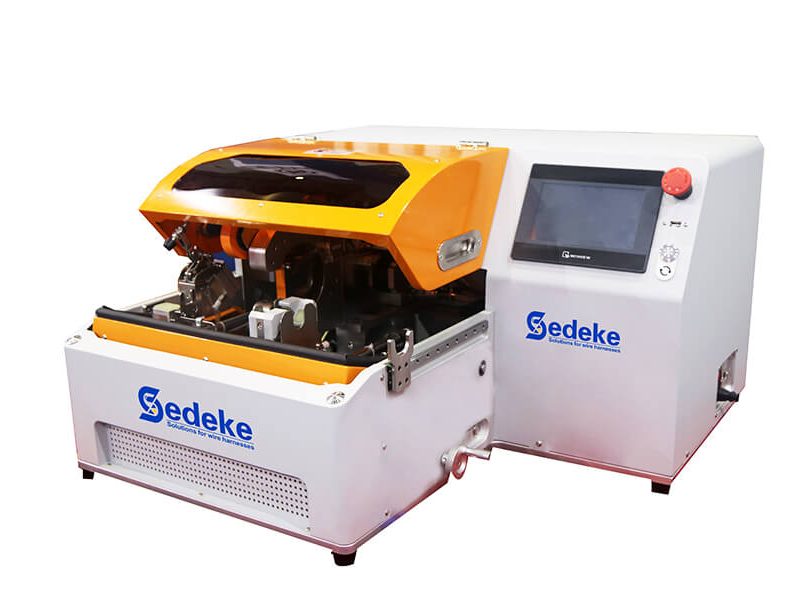
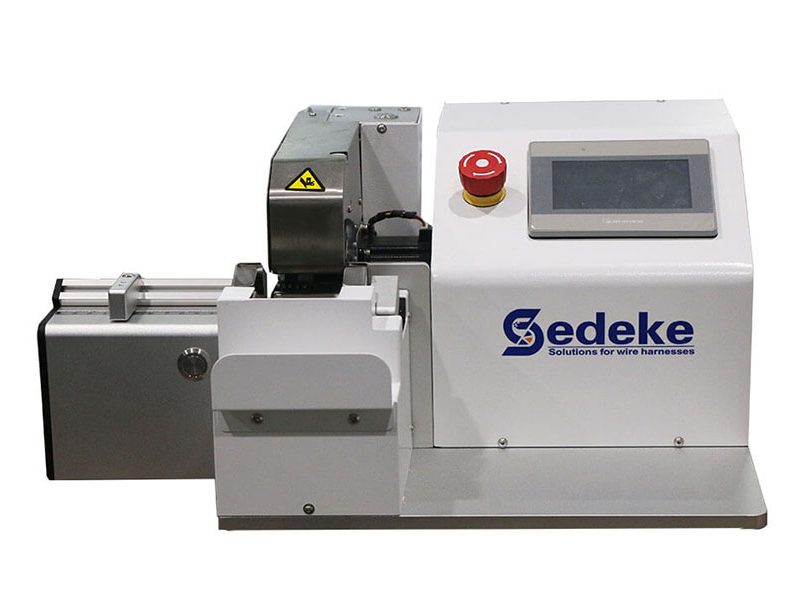
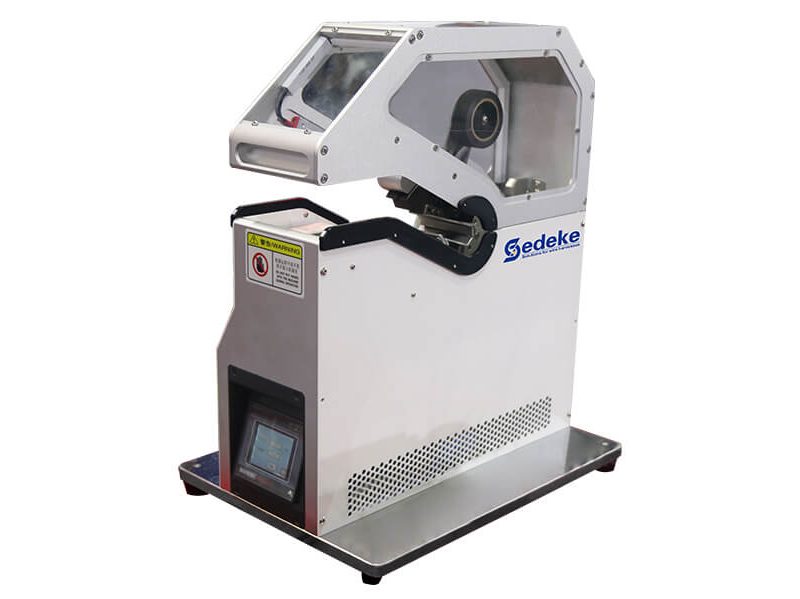
For longer coverage, STP-C provides bench-based interval or continuous wrapping, STP-D uses fixed-length traction with saved programs, and STP-AS lets the operator guide the harness through a pedal-controlled fixed head. These wire harness wrapping machines follow different production routes.
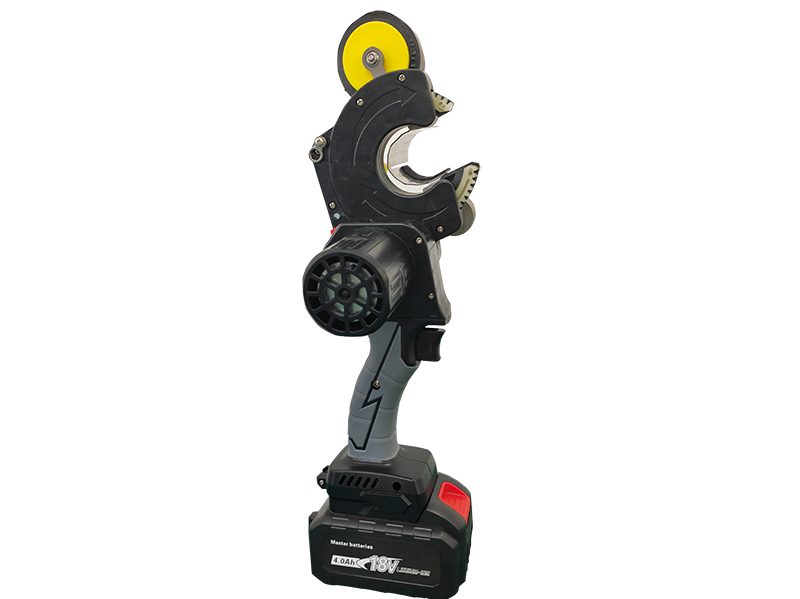
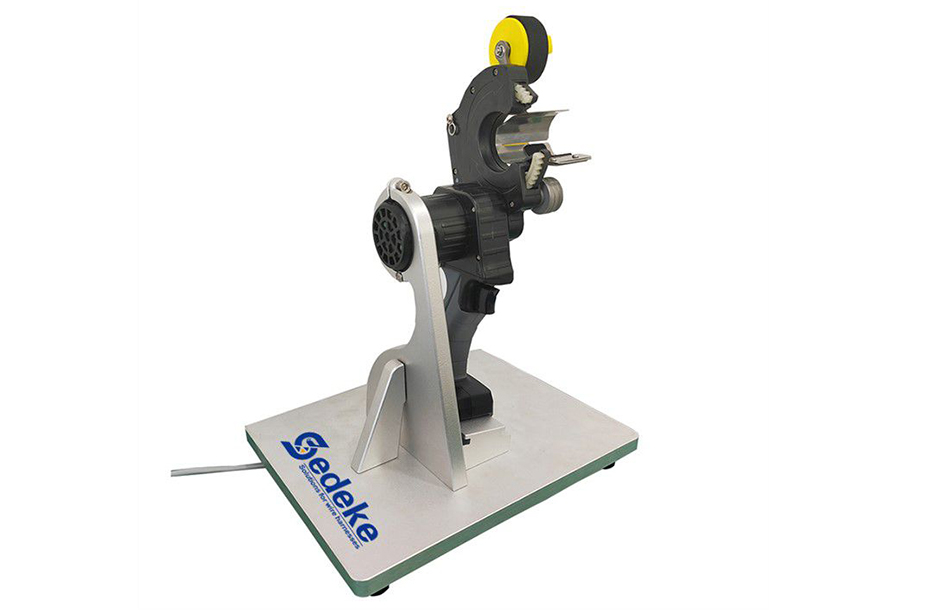
STP-F brings the wrapping head to the workpiece. The rechargeable unit has four speed gears and an optional fixed base. This handheld wire harness taping machine route fits workstations where tool movement matters, subject to the supported tape and harness configuration.
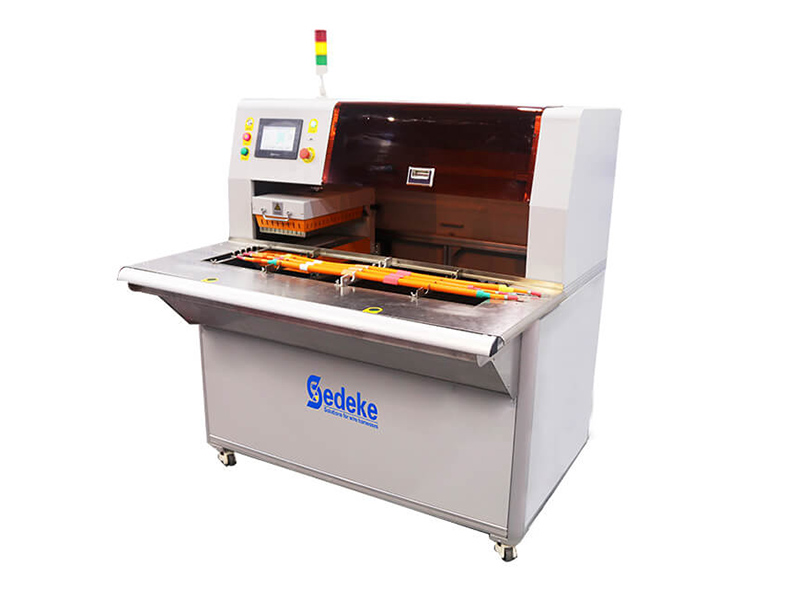
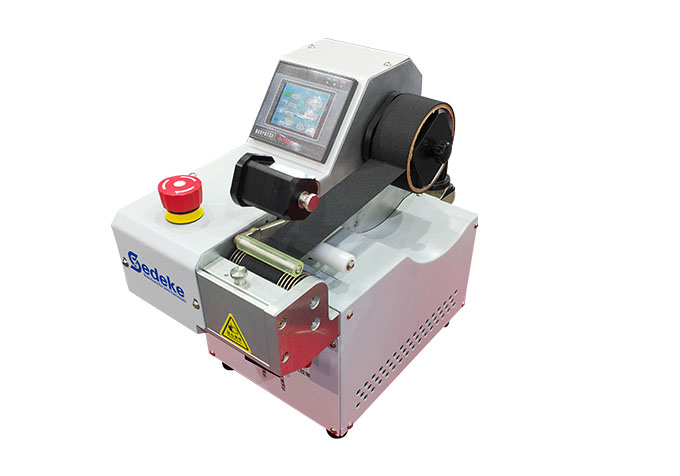
STB-50C is an automatic tape cutting machine, not a harness wrapper. It uses touchscreen length settings and rotary cutting, with a self-cleaning, anti-stick blade direction. Choose it when the required output is prepared tape pieces.
| Model | Primary task | Harness range | Tape width / roll | Operating route | Key control or capability | Product link |
|---|---|---|---|---|---|---|
| STB-10 | Bundling at a middle or defined point | ≤10 mm or customized | 19–50 mm / confirm current roll configuration | 3–7 adjustable turns | Can be configured around a localized bundling task and has an integration direction for joint-processing equipment | View STB-10 |
| STB-30 | Connector-end and short-length wrapping | ≤20 mm | 19 mm / roll configuration not published | Programmed path up to 200 mm | Programs trajectory, length, turns and compression; quick-change fixture | View STB-30 |
| STB-55 | Joint and weld-point bundling with wider tape | ≤8 mm or customized | 19–55 mm / ≤160 mm | 3–5 adjustable turns | Designed around wider adhesive and cloth tape at localized joints | View STB-55 |
| STB-60 | Positioned bundling at multiple points | ≤8 mm or customized | 9 or 19 mm / ≤150 mm | 2–6 adjustable turns | Can work with a customized clamping route for multi-point bundling | View STB-60 |
| STP-C | Interval or continuous harness wrapping | 5–32 mm | Confirm current tape and roll configuration | Fixed bench wrapping; feed 0–200 mm/s | Adjustable wrapping speed and overlap for interval or continuous operation | View STP-C |
| STP-D | Preset-length traction wrapping | Confirm current Type I / Type II configuration | 9–19 mm / confirm current roll configuration | Dense, spaced or combined wrapping | 999 programs, barcode selection and model-specific data connection options | View STP-D |
| STP-AS | Pedal-controlled wrapping of longer harnesses | Type I: 5–26 mm; Type II: 2–18 mm | 9–19 mm / roll size not published | Operator pulls the harness through a fixed head | Start, pause and stop control for harnesses from 200 mm in length | View STP-AS |
| STP-F | Handheld or optional fixed-base wrapping | Confirm current configuration | 9–25 mm / confirm current roll configuration | Rechargeable handheld movement | Four adjustable speed gears, hidden blade and emergency brake | View STP-F |
| STB-50C | Tape cutting and preparation | Not applicable | 9–50 mm / ≤160 mm or customized | Touchscreen length setting and rotary cutting | Self-cleaning, anti-stick blade direction | View STB-50C |
The table narrows the machine route but does not replace current configuration confirmation.
A wire harness taping machine must match more than the nominal wire diameter. Taping position, harness movement, tape construction and the required coverage pattern determine how the workpiece is held, how the tape is fed and which machine route can complete the cycle.
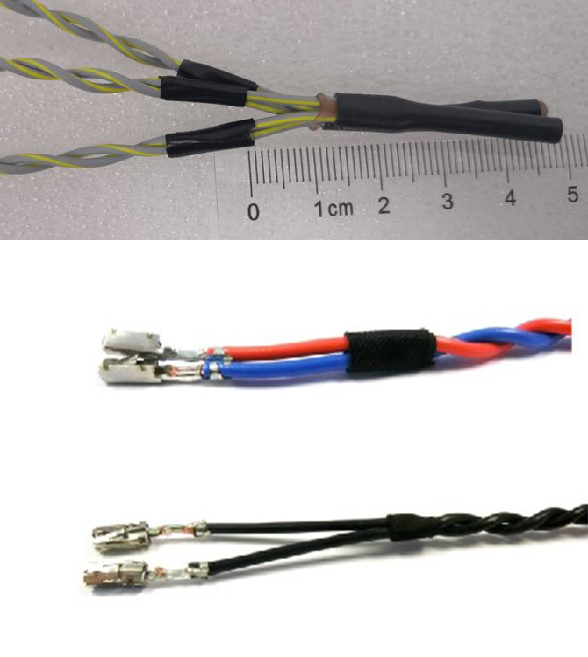
Localized tasks place tape around a splice, branch, connector end or another defined point. Sedeke’s point-bundling range includes equipment for harness diameters up to 8 mm, 10 mm or 20 mm, depending on the model and task. Lengthwise wrapping uses a different handling route because the harness must travel through, or be guided past, the wrapping head. Branches, connectors and diameter changes also affect clamping and clearance.
Decision: Match the machine to the taping position and harness movement—not diameter alone.
PVC, cloth, cotton and felt tapes appear across different Sedeke model records, but compatibility is model-specific. Published tape widths range from narrow 9 mm formats to 55 mm on the STB-55 joint-bundling route. Roll outer diameter and mandrel size must also fit the machine’s tape holder. Adhesive behavior matters at the cutter, which is why STB-50C uses a self-cleaning, anti-stick blade direction for tape preparation.
Decision: Confirm the complete tape format, not only its material name.
The finished coverage determines the motion. STB machines can apply a set number of turns at a defined point; verified model ranges include 3–7, 3–5 or 2–6 turns. STP-C supports interval or continuous wrapping with adjustable overlap, while STP-D provides dense, spaced or combined wrapping through a preset-length traction route. STB-30 addresses programmed connector-end or short-section wrapping up to 200 mm.
Decision: Define whether the result requires localized turns, controlled overlap, spaced coverage or a preset wrapped length.
Harness taping changes with assembly size, routing density and workpiece access. The task may involve isolated joints, long trunks, protective conduits or completed assemblies that cannot follow a fixed path.
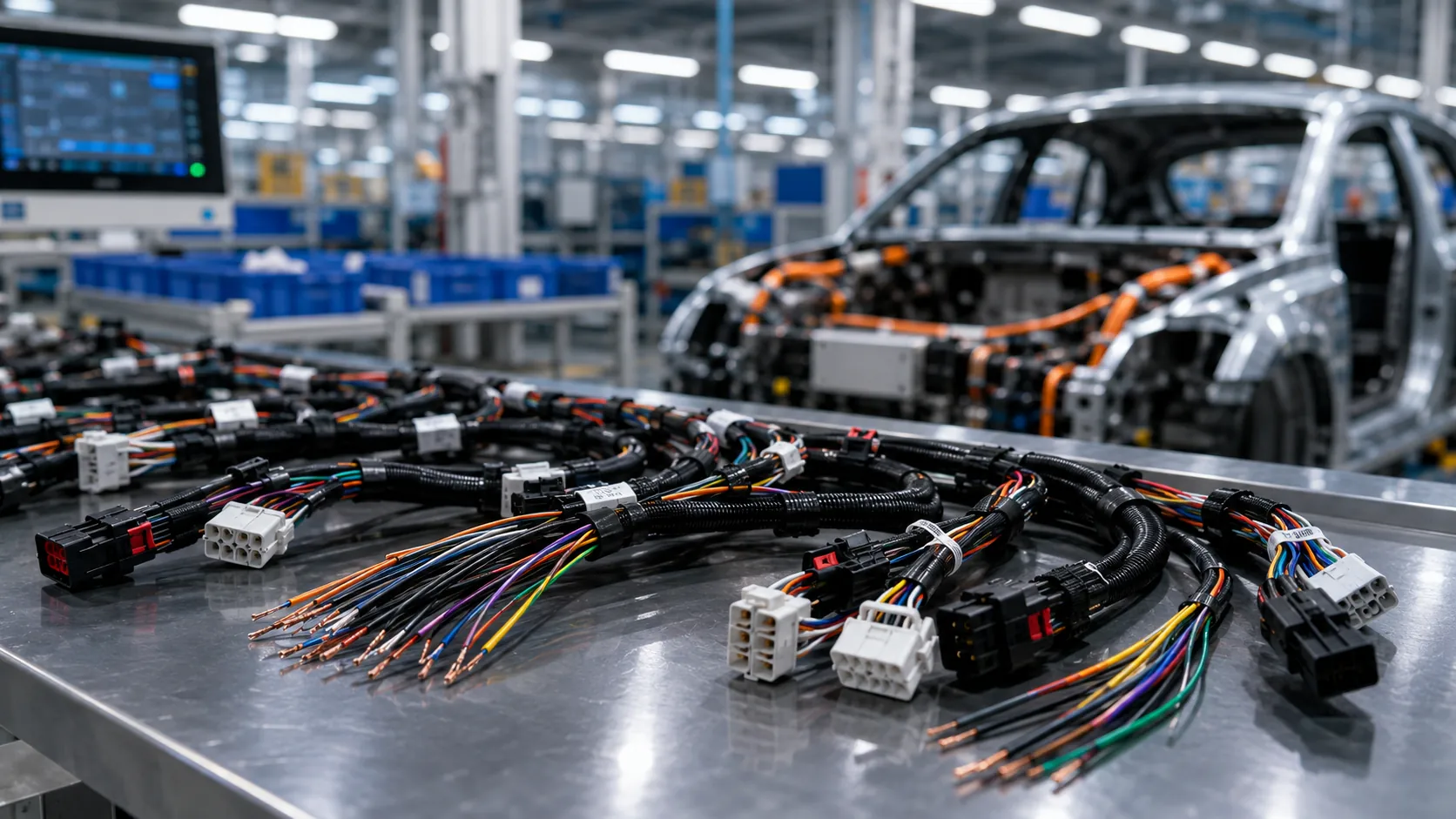
Vehicle harnesses combine connector exits, splices, branches, corrugated tubes and long routed sections. Tape may be applied in localized turns or extended patterns as the harness moves through production stations. The process must accommodate changes in diameter and geometry without obstructing connectors, clips or branch locations needed for final routing.
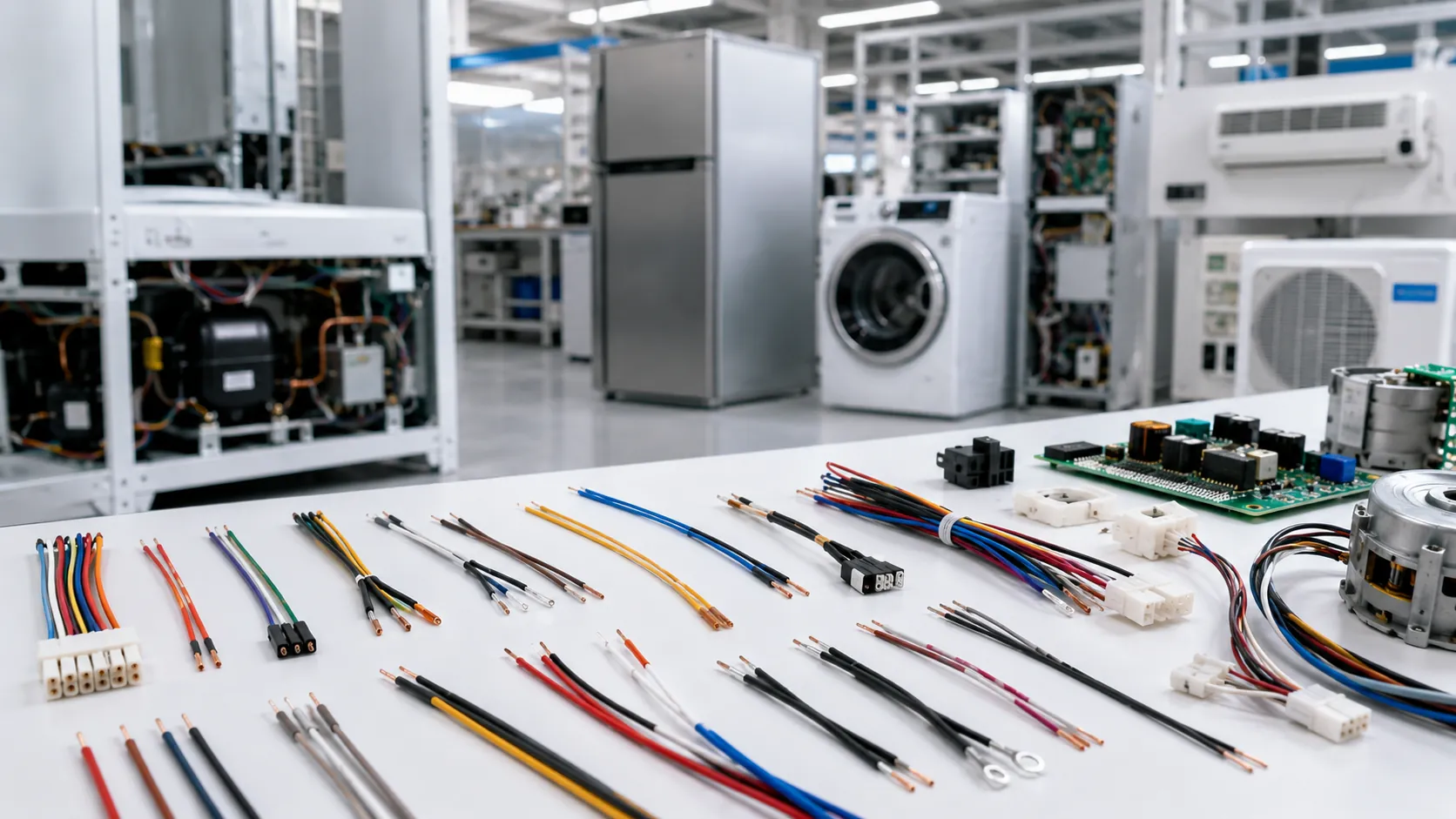
Appliances, electronic assemblies and control equipment use compact wire groups routed between terminals, switches, sensors and controls. Taping groups selected conductors around connector ends, junctions or trunk sections before installation. Limited space around short leads and assembled components makes access as important as nominal wire-group diameter.
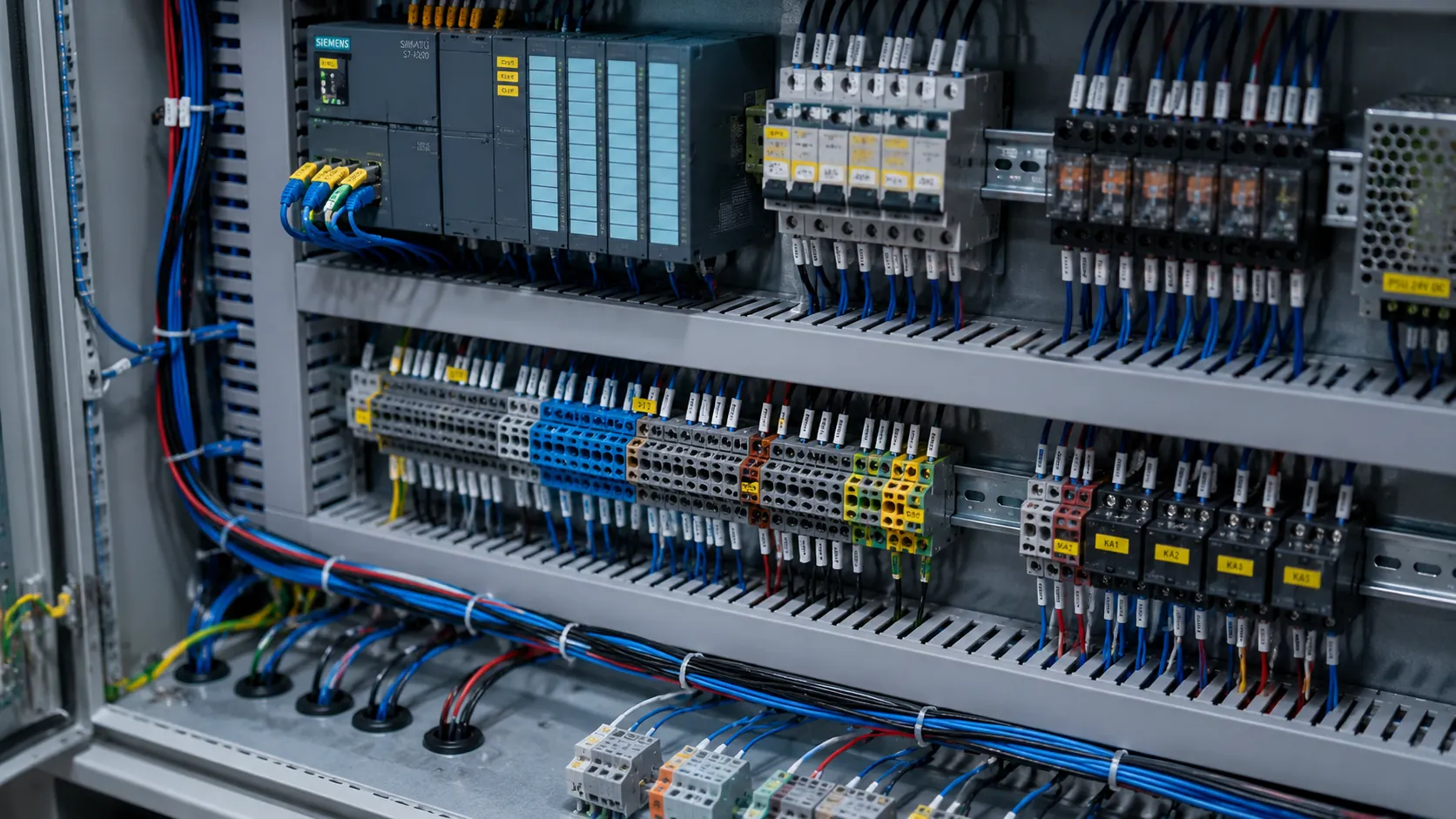
Industrial equipment can include control wiring, sensor cables, motor leads and cable groups that run through frames, cabinets or moving structures. Some sections require spaced or continuous wrapping, while others need a localized hold near a termination or branch. Cable stiffness, surface profile and the transition between protected and unprotected sections influence how the workpiece passes the wrapping area.
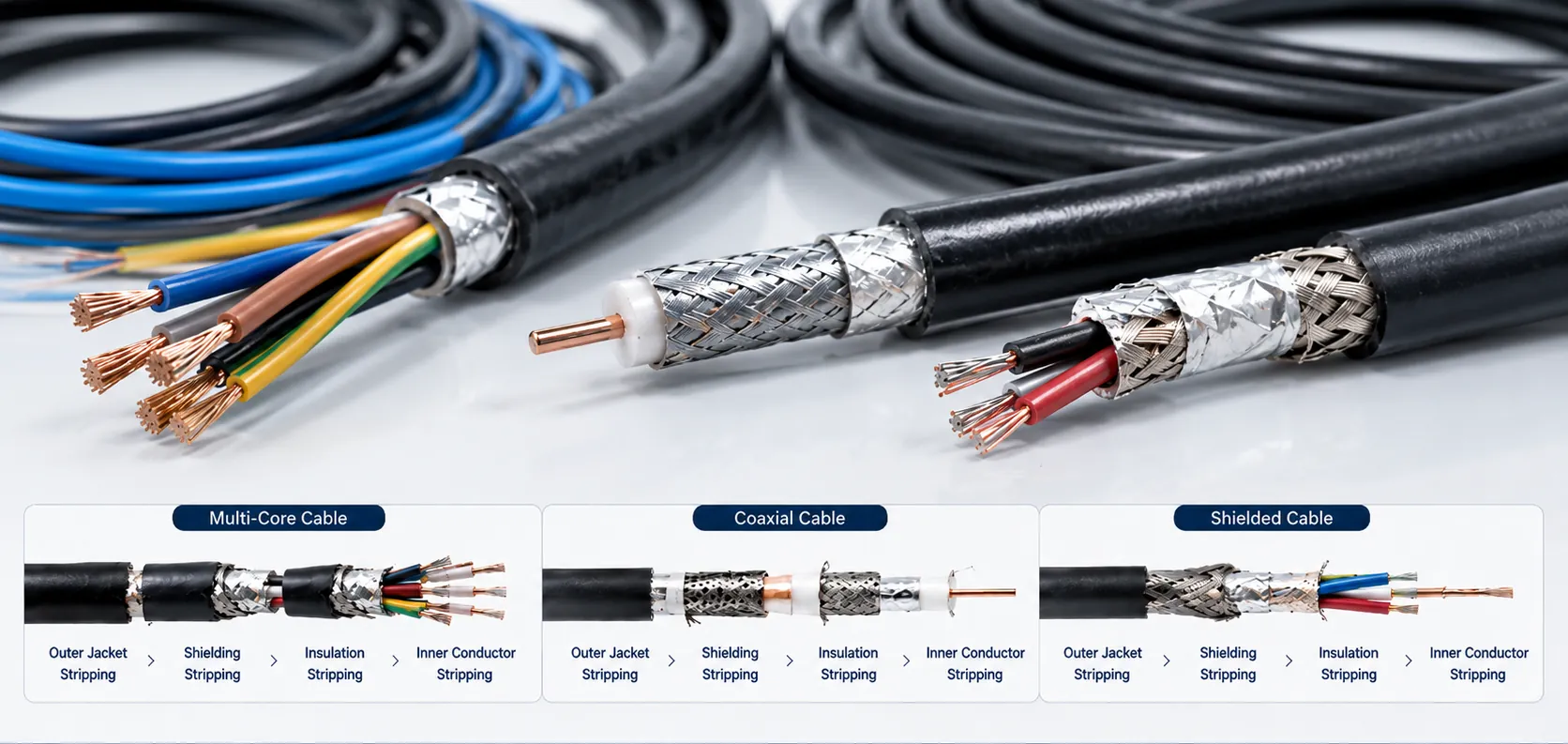
Prototype harnesses, repair work and mixed-production cells frequently involve assemblies with changing layouts or restricted movement. The workpiece may already be held in a jig or installed inside a larger assembly, so the taping action must reach the accessible section directly. This environment favors a flexible operating route while still requiring controlled tape width, overlap and coverage position.
Taping is difficult to control when the machine route does not match the location, material or repeatability required by the assembly. Sedeke uses separate machine motions and model-specific controls for these tasks.
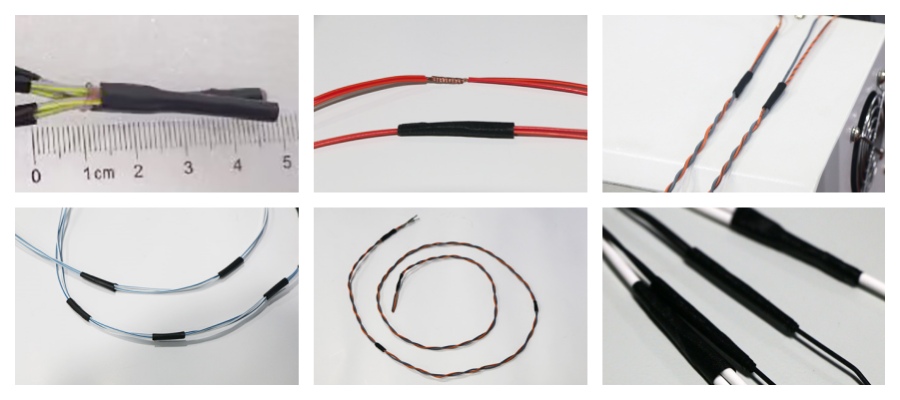
When operators judge every start point and turn count by eye, localized wraps can vary. STB-10 provides 3–7 adjustable turns, while STB-60 combines 2–6 turns with a clamping route for positioned multi-point work. For connector ends and short sections, STB-30 programs the trajectory, length, turns and compression. These controls define the taping action before the cycle.
Capability focus: Adjustable turns, programmed motion and positioned bundling.
A short splice, long main trunk and movement-restricted assembly cannot follow one handling method. STP-C uses a fixed bench route; STP-D moves the harness through fixed-length traction; STP-AS uses an operator-guided, pedal-controlled head; and STP-F brings a rechargeable tool to the workpiece. The machine motion can therefore follow the assembly’s physical handling limits.
Capability focus: Fixed, traction, pedal-controlled and handheld routes.
Adhesive residue around a cutting point can interfere with tape preparation. STB-50C combines touchscreen length settings with rotary cutting and a self-cleaning, anti-stick blade direction. It separates pre-cut tape preparation from harness wrapping instead of forcing the cutting task into a wrapping cycle.
Capability focus: Set-length rotary cutting with an anti-stick blade direction.
Repeated products are harder to manage when fixtures and settings must be rebuilt from memory. STB-30 uses a quick-change fixture for programmed connector-end work. STP-D stores up to 999 programs and supports barcode selection for recalling an existing job. These are model-specific controls, not functions shared by every Sedeke tape bundling machine or wrapper.
Capability focus: Quick-change tooling and model-bounded program recall.
Include the cable OD, structure, material, strip length, number of layers and target output.
Sedeke has over 25 years of extensive experience in the field of industrial automation wire harness processing. The company operates three R&D and production bases and four major processing plants in Jiangsu and Zhejiang, China, and maintains technical support centers in Europe and Southeast Asia. Its products are sold in more than 50 countries and regions worldwide, and the company has registered its trademarks in nine countries, including Germany and India, demonstrating a mature global supply chain and service capabilities.
The company boasts a technically proficient and experienced R&D team, with a product line that comprehensively covers cutting, stripping, crimping, winding, and fully integrated automated equipment. In addition to offering a series of standardized rubber/plastic wire harness processing machines, Sedeke provides customized wire harness processing solutions that are innovatively optimized and perfectly tailored to meet specific customer requirements.
Sedeke’s equipment and technologies are widely used in high-end manufacturing industries such as automotive wiring harnesses, new energy, rail transit, aerospace, home appliances, power and telecommunications, and medical devices. They help drive the intelligent transformation of factories and serve as a reliable partner brand for industrial support.
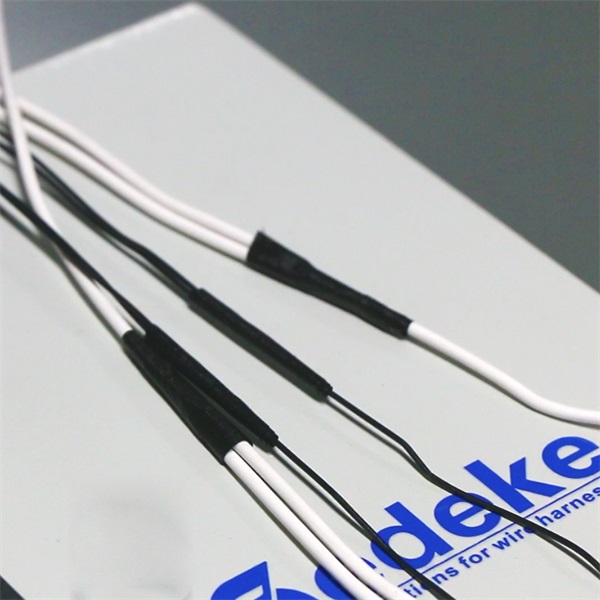
Tape bundling applies several turns around a defined point, such as a splice, branch or connector end. Wire harness tape wrapping covers a longer section with continuous, spaced or combined tape patterns. The processes require different workpiece movement: bundling holds one location at the taping point, while wrapping moves or guides the harness along the wrapping head.
Use point taping when the tape only needs to secure a specific joint, branch, welded area or connector end. Use continuous wrapping when a longer harness trunk needs extended coverage. The decision follows the required tape position and movement of the assembly, not simply the harness diameter or the expected production volume.
No. Every machine has defined limits for harness diameter, tape width, roll outer diameter and mandrel size. Tape material and the required wrapping pattern can narrow the choice further. Some configurations can be customized, but customization should not be assumed until the actual tape roll, workpiece and machine version have been checked together.
A handheld machine is more suitable when the wrapping tool must move to the workpiece—for example, with a long harness, an assembly held in a jig or a section with limited bench access. Sedeke STP-F provides rechargeable operation, four speed gears and an optional fixed base, subject to its current tape and harness configuration.
No. An automatic tape cutting machine prepares tape pieces at a set length but does not apply them around the harness. A tape wrapping machine feeds and winds tape onto the workpiece. Sedeke STB-50C belongs to the preparation route, using touchscreen length settings, rotary cutting and a self-cleaning, anti-stick blade direction.