

Heat Shrink Tube Machine
Shrink tubing precisely where your harness needs protection—from terminal ends and connector joints to mid-wire splices and multiple positions. Sedeke combines compact infrared chambers, continuous belt heating, dual-station processing and programmable moving modules, giving manufacturers a practical route for small wires, large cables and tube diameters up to 50 mm.
Compact, belt and moving-module heating
Tube diameters up to 50 mm
Local, multi-position and large-harness processing
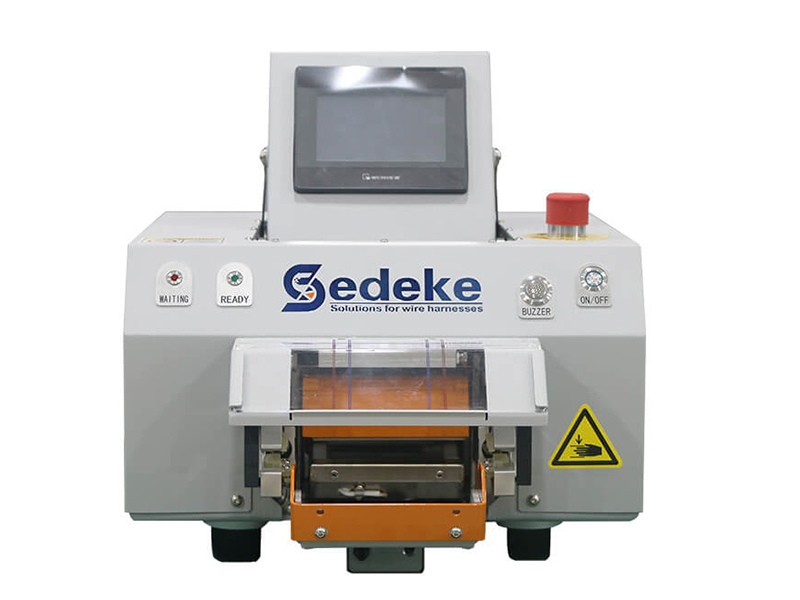
The right heat shrink tube heating machine depends first on where the tube sits and how the workpiece should pass through the heat. Sedeke provides four distinct processing routes, from compact infrared heat shrink machine configurations to programmed multi-position movement. Use the route cards to narrow the choice, then confirm the dimensional and electrical limits in the comparison table.
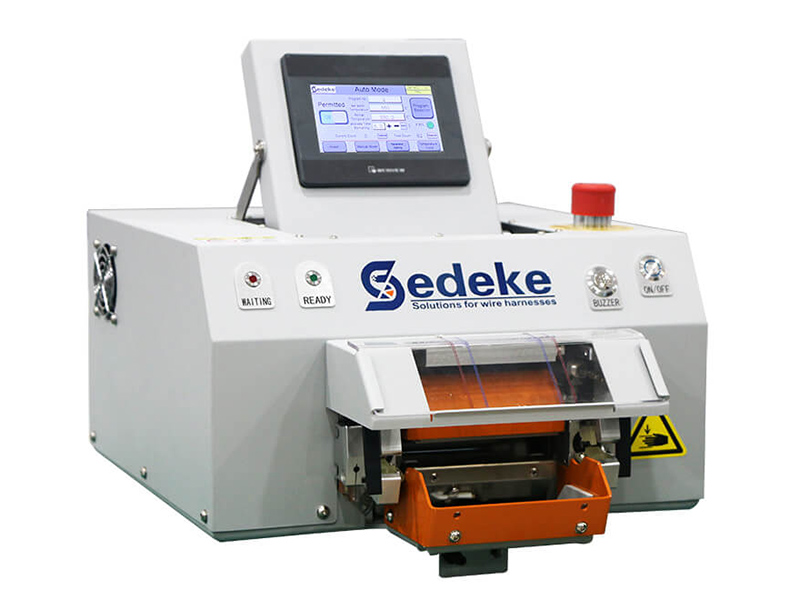
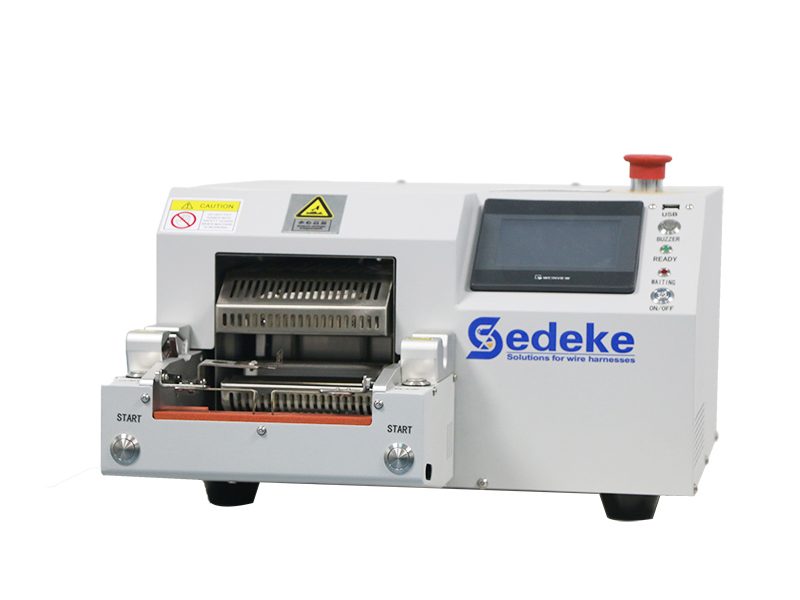
Choose HSM-60 or HSM-70 when one or two harnesses need localized shrinking at a compact workstation. HSM-60 processes tubes below 12.5 mm OD and 60 mm long, while HSM-70 extends the range to below 20 mm OD and 75 mm long. Their enclosed heating cavities concentrate infrared heat around short terminal- or connector-area tubing without requiring a conveyor line.
Models: HSM-60 / HSM-70
Best fit: Short tubes, one or two harnesses, limited workstation space
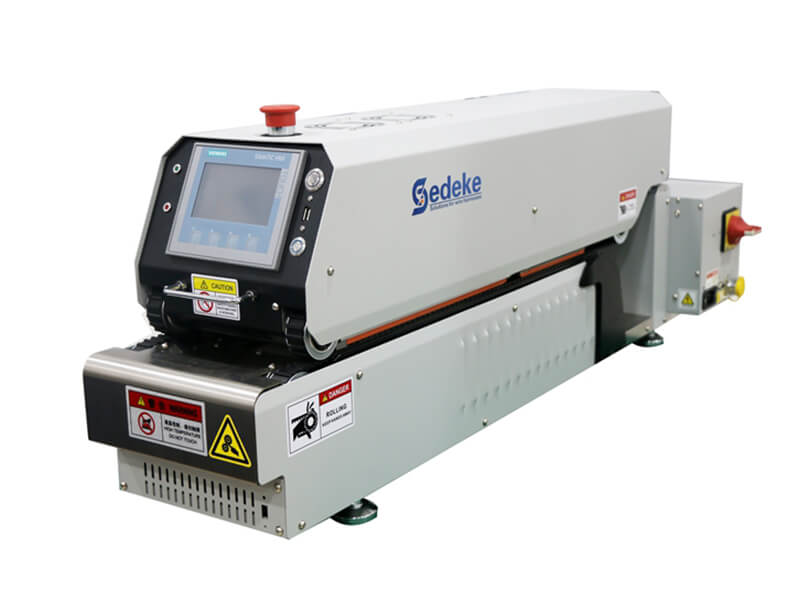
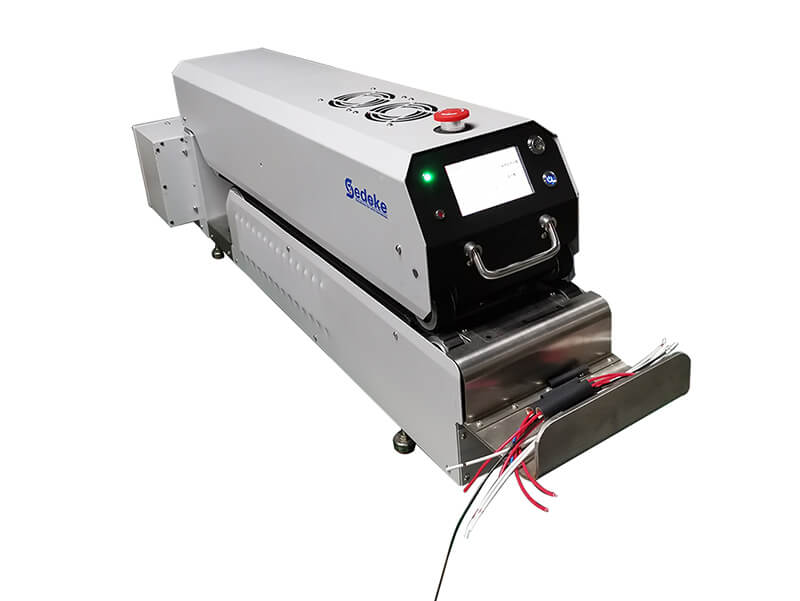
HSM-80B is the heat shrink conveyor machine for repeatable batches that can travel through a fixed heating path. It accepts tubes up to 15 mm OD with 70 or 90 mm maximum length and provides a 0–2.75 m/min adjustable belt. The heated panel is controlled from 300–600°C at the published ±1°C accuracy. Sedeke lists 25 harnesses per minute under its stated processing conditions; actual output depends on the tube, workpiece spacing and belt setting.
Model: HSM-80B
Best fit: Repetitive batches and controlled continuous movement
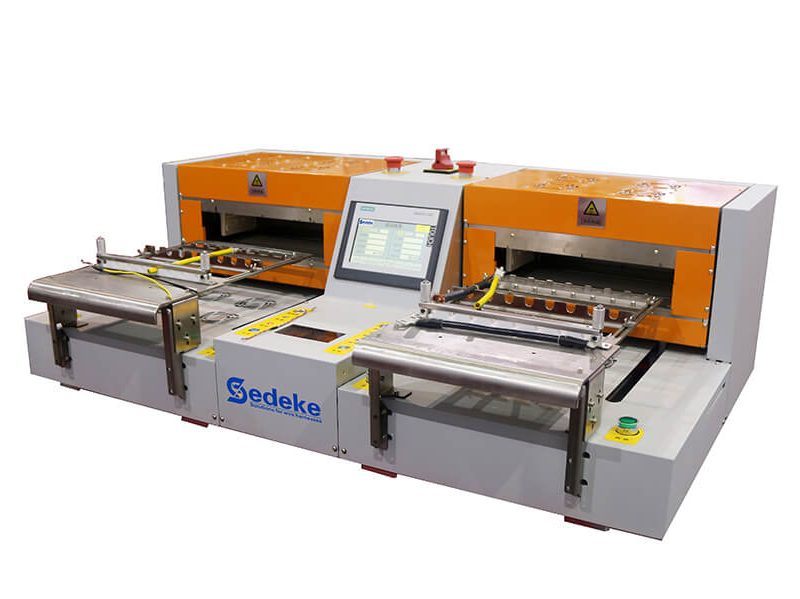
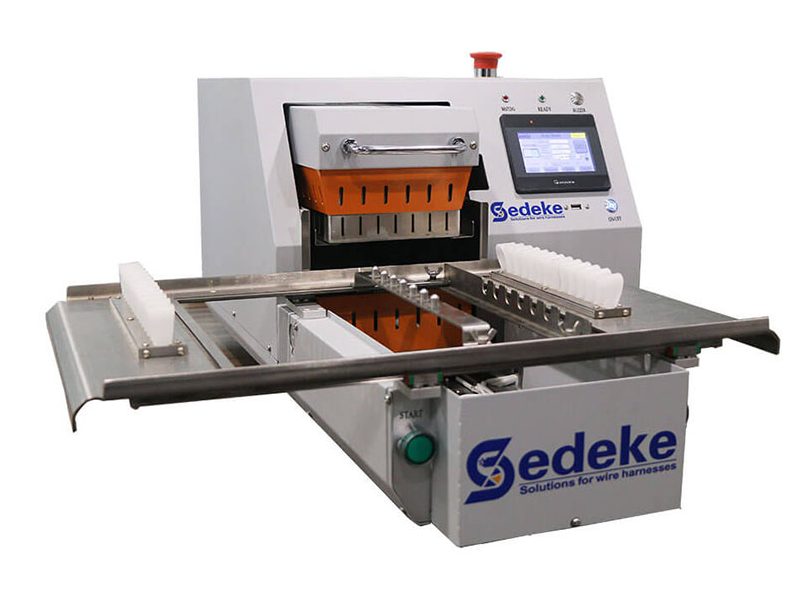
HSM-90 and HSM-90S provide two independently operating sides for larger harness work. On HSM-90, the harness moves while the heating module remains fixed; on HSM-90S, the harness remains fixed and the module moves. HSM-90 handles harnesses up to 120 mm² and tubes up to 35 mm OD, while HSM-90S extends those limits to 240 mm² and 40 mm. Each positioning fixture is configured for the workpiece.
Models: HSM-90 / HSM-90S
Best fit: Large cables, dual-station loading and fixture-controlled positioning
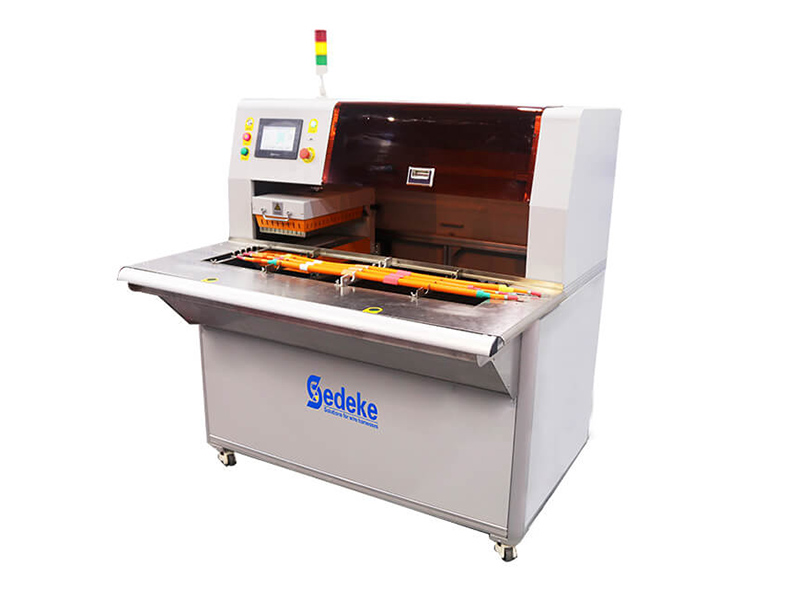
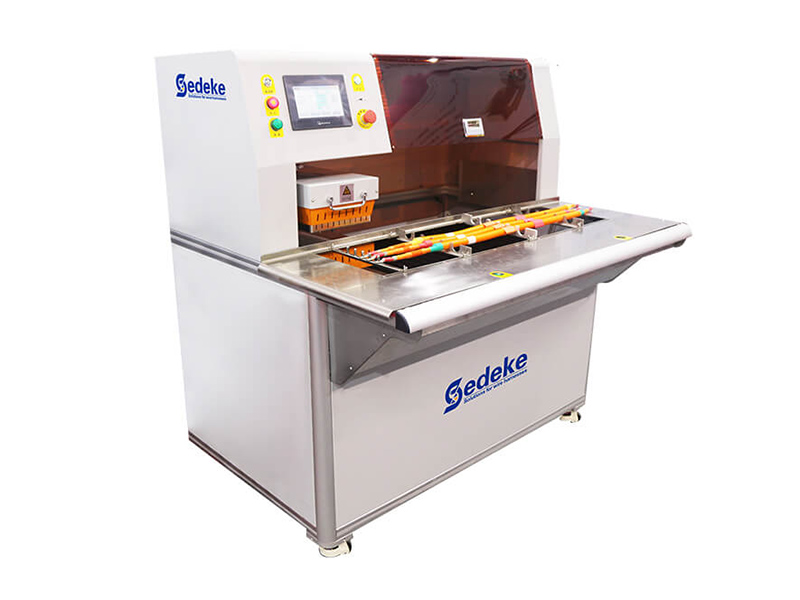
Use HSM-25M or HSM-120 when the shrink point is in the middle of a harness, several positions must be heated, or long workpieces require programmed movement. HSM-25M combines Y-axis heating-cavity travel with X-axis harness-bracket travel and accepts tubes up to 25 mm OD and 300 mm long. HSM-120 uses X/Y heating-module movement, supports tubes up to 50 mm OD and provides up to 750 mm shrink travel.
Models: HSM-25M / HSM-120
Best fit: Middle, end, long-distance and multiple shrink positions
| Model | Best-Fit Task | Harness / Tube Range | Heating Length / Space | Temperature | Power | Motion / Speed | Data Direction |
|---|---|---|---|---|---|---|---|
| HSM-60 | Compact local shrinking | Tube OD <12.5 mm | Tube length <60 mm; cavity W77 × Ø32 mm | <550°C | 500 W | Local cavity; 1–2 harnesses | 485, network, USB; MES direction; 14-day temperature data |
| HSM-70 | Larger compact local shrinking | Tube OD <20 mm | Tube length <75 mm; cavity W90 × Ø40 mm | <650°C | 600 W | Local cavity; 1–2 harnesses | 485, network, USB; MES direction; 14-day temperature data |
| HSM-80B | Continuous belt processing | Tube OD 0–15 mm | Tube length 70/90 mm | 300–600°C ±1°C | 2100 W | Belt: 0–2.75 m/min | 485, network, USB; MES direction; 14-day temperature data |
| HSM-90 | Dual-station large harnesses | Harness ≤120 mm²; tube OD ≤35 mm | Heating panel ≤300 mm | ≤600°C | 4000 W | Harness moves; module fixed | 485, network, USB; MES direction; 14-day temperature data |
| HSM-90S | Higher-capacity dual-station work | Harness ≤240 mm²; tube OD ≤40 mm | Heating panel ≤300 mm | ≤600°C | 8500 W | Harness fixed; module moves | Confirm final communication configuration |
| HSM-25M | Middle or multi-position shrinking | Harness ≤120 mm²; tube OD ≤25 mm | Tube length ≤300 mm; cavity width 300 mm | ≤650°C | 2000 W | Y-axis cavity + X-axis bracket | 485/network; MES direction; 14-day temperature data |
| HSM-120 | Large, long-distance multi-position work | Harness ≤240 mm²; tube OD ≤50 mm | Tube length ≤70/120 mm; shrink travel ≤750 mm | ≤650°C | 2000 W | X/Y heating-module movement | 485/network; MES direction; 14-day temperature data |
A stable heat shrink tubing process controls the workpiece from loading through cooling. Sedeke machines use motion paths while keeping tube position, heat exposure and release under defined settings.
Place the tube over the terminal, connector, splice or harness position. The assembly enters a compact cavity, travels on the HSM-80B belt or rests in a workpiece-specific fixture.
Set shrink temperature, heating time, belt speed, movement position or cooling time. HSM-25M supports multistage programs; HSM-120 can define walking positions for several shrink points.
HSM-80B moves workpieces on a belt. HSM-90 moves the harness past a fixed module, while HSM-90S moves the module. HSM-25M and HSM-120 coordinate axes for multiple positions.
Selected Sedeke machines apply 3–6 μm thermal infrared heating to recover the tube around the assembly. Temperature works with time, belt speed or programmed travel to control exposure.
Cool the tube before removing the harness or allowing pieces to touch. Supported Sedeke systems incorporate cooling-related settings or fan cooling, particularly for adhesive-lined tubing and multi-harness processing.
Sedeke heat-shrink equipment covers work from short terminal sleeves to large cables with several shrink points. The required process changes with tube position, harness size, production pattern and the way the assembly must be supported during heating.
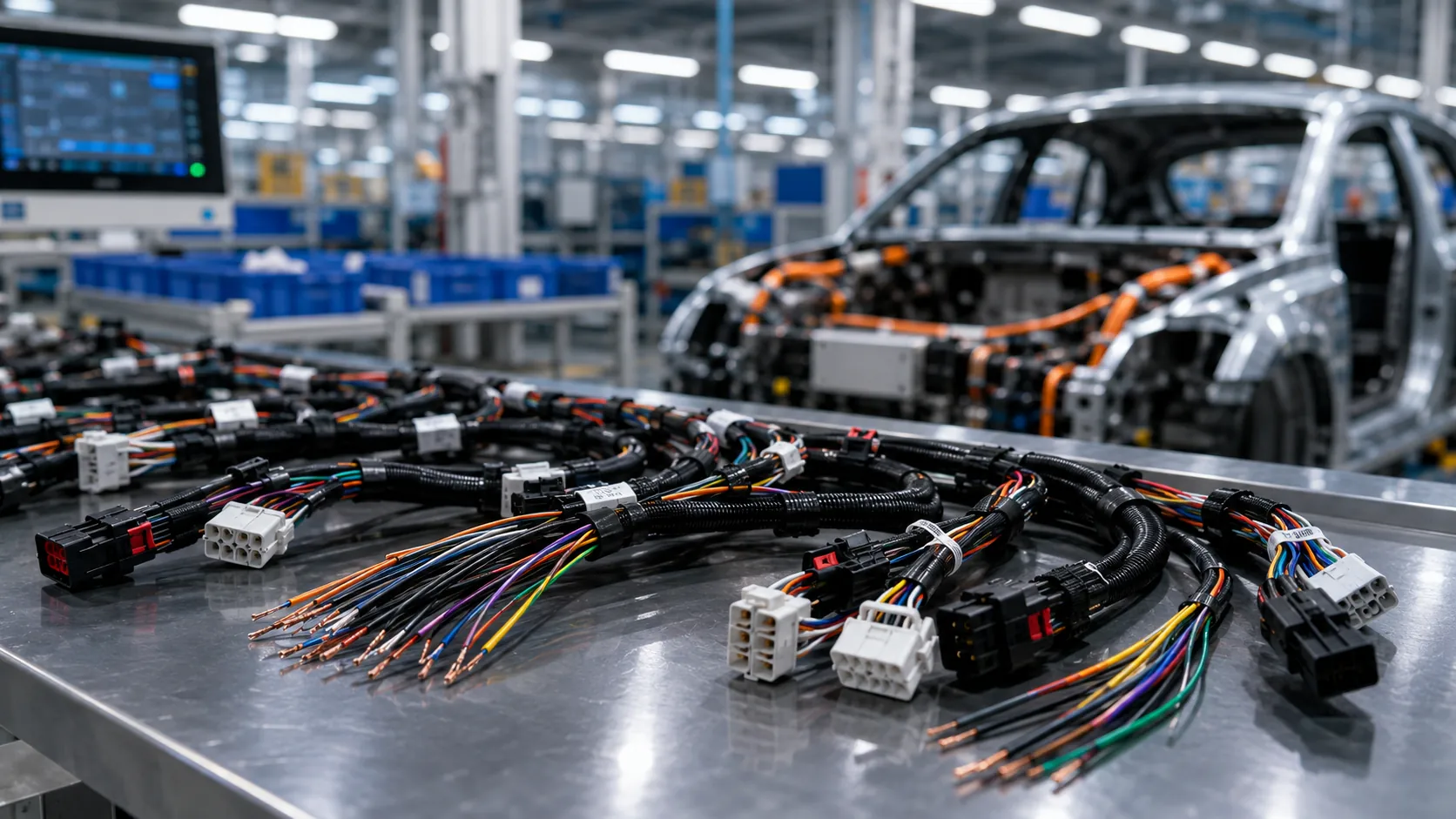
Ring terminals, end connectors and tubular terminals often need a short sleeve over the crimp barrel and wire transition. This terminal insulation task requires accurate tube placement and localized heating, especially when the connector housing or nearby wire insulation should remain outside the main heating area.
A splice positioned away from the wire end requires the tube to stay centred over the joint throughout heating. With adhesive-lined heat shrink, controlled exposure supports tube recovery and adhesive flow, while cooling helps the processed sleeve retain its position before the harness is handled or placed beside another assembly.
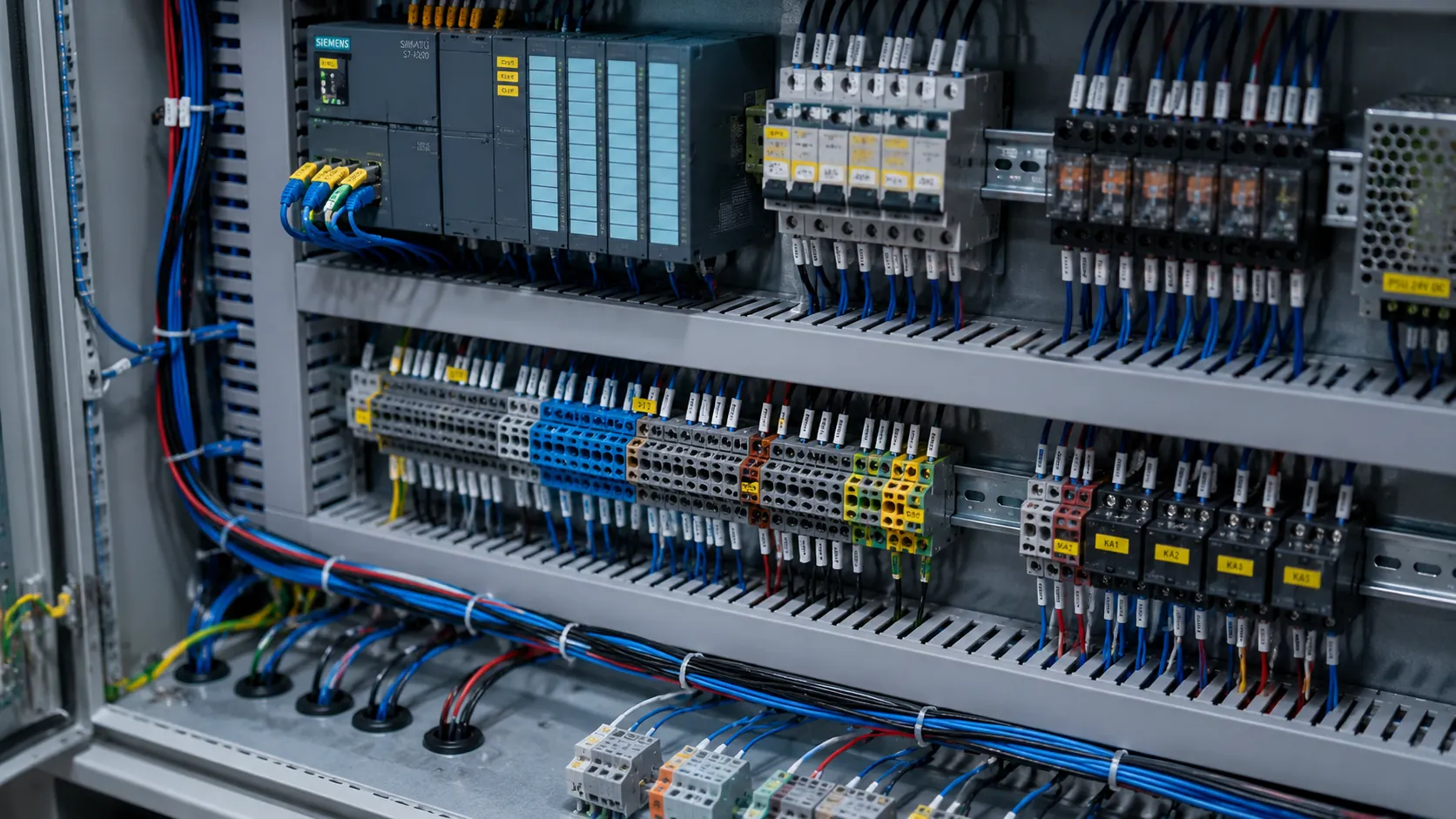
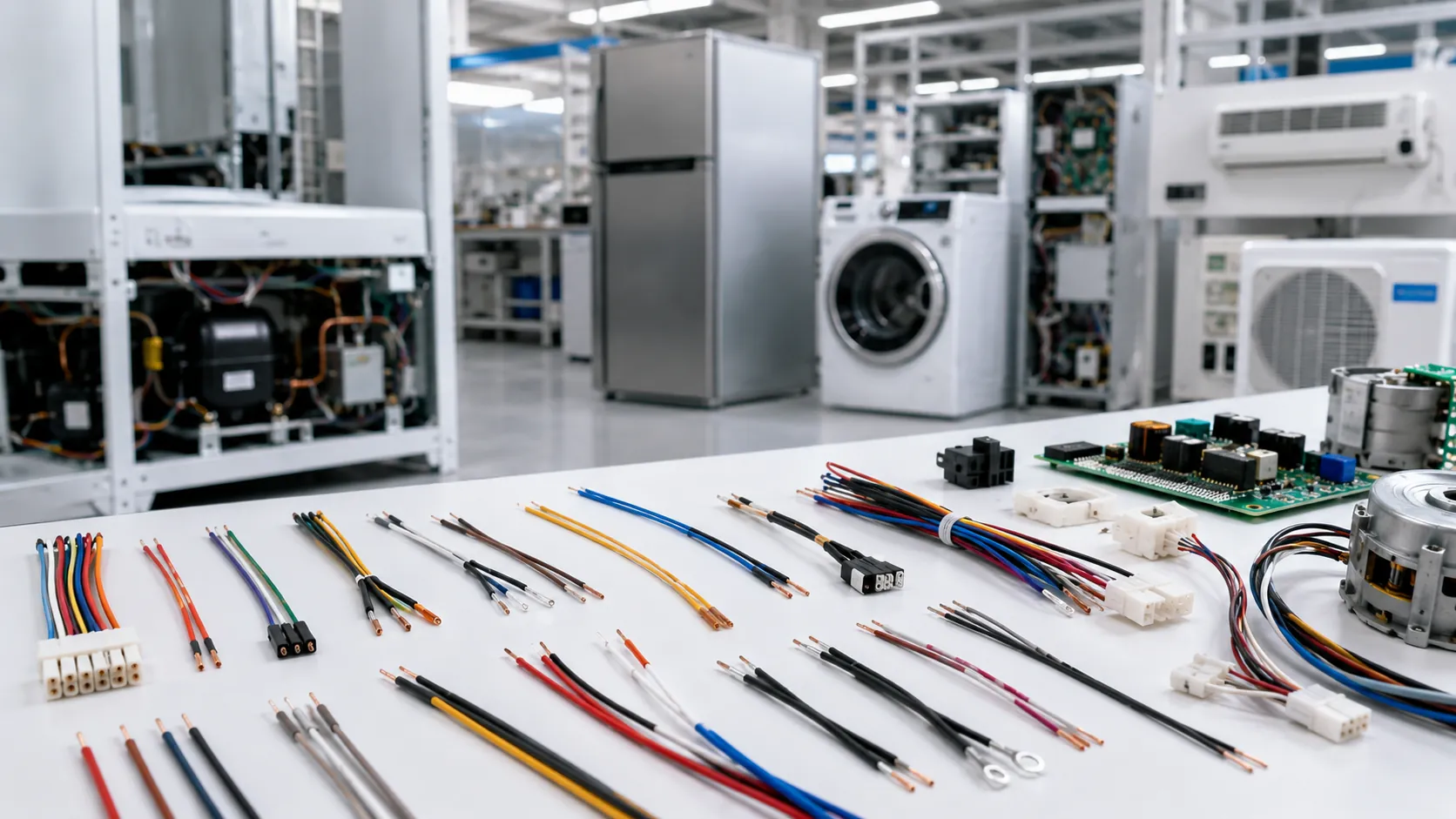
Electronics assembly, appliance wiring and industrial control harness production frequently combine mixed wire sizes, short shrink sections and repeated batches. A compact workstation can process localized sleeves close to terminals, while a belt-based route suits assemblies that can maintain consistent spacing and orientation through a fixed heating path.
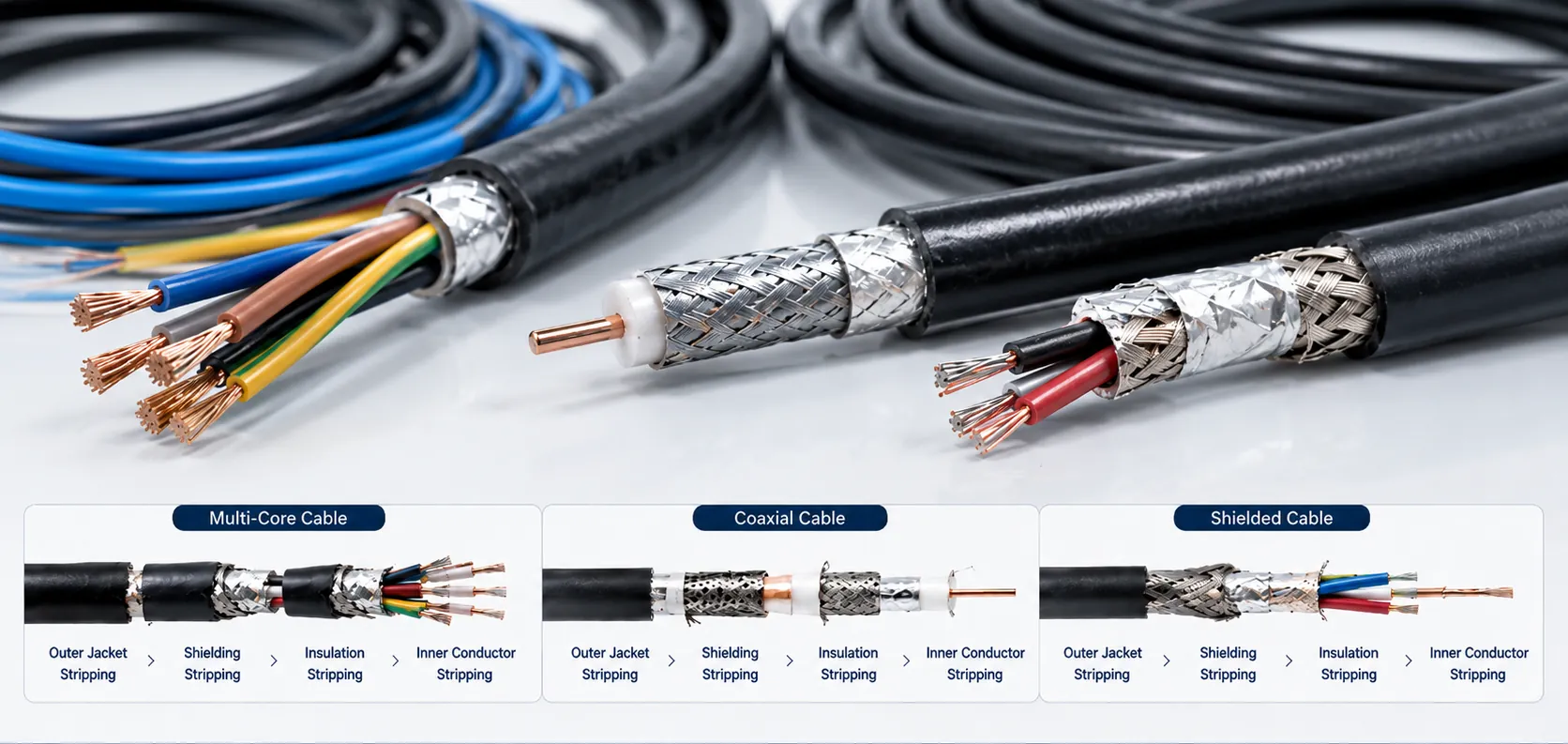
Power cables, heavy-gauge harnesses and long assemblies may contain larger tubes or several shrink points separated along the workpiece. Large cable heat shrinking needs secure support, sufficient heating clearance and a fixture matched to the cable geometry. Programmed movement can bring each position through the heating area without repeatedly repositioning a heavy assembly by hand
A heat shrink machine for wire harness is used for terminal insulation, connector exits, mid-harness splices, adhesive-lined sleeves, repeated electrical assemblies and large cables with multiple shrink positions.
Variable heat-shrink results often come from mismatched tube position, exposure, workpiece movement and cooling. Sedeke addresses these variables with distinct machine structures rather than one heating method.
Capability Across the Current Range
Tube OD up to 50 mm | Harness section up to 240 mm² | Shrink travel up to 750 mm | Local, belt and moving-module heating
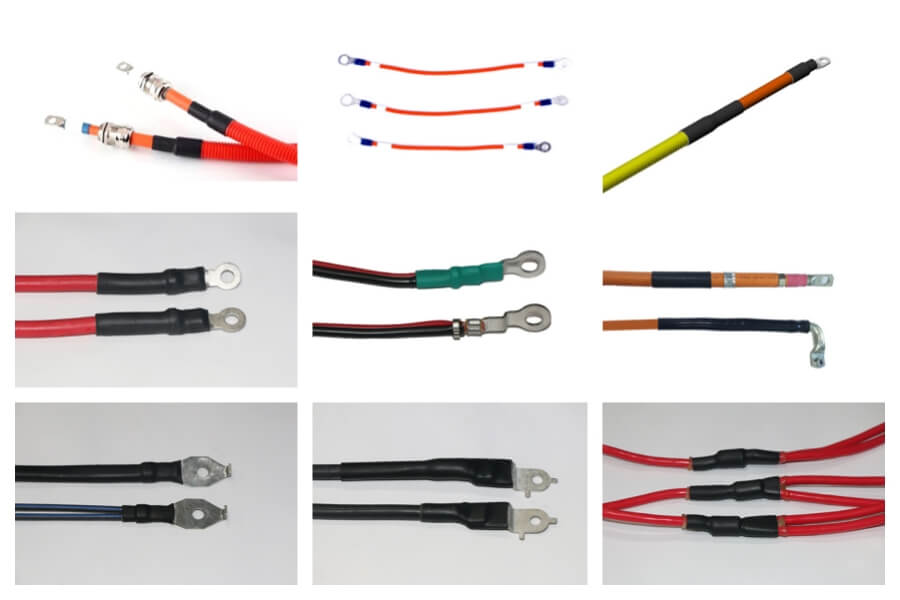
Uneven recovery occurs when heating temperature or exposure varies. Sedeke combines thermal infrared heating with model-specific temperature and time controls. HSM-80B provides 300–600°C heated-panel control at the published ±1°C accuracy, while thermal compensation supports temperature recovery between cycles.
Excessive heat or dwell can distort the tube and nearby insulation. Sedeke controls exposure through heating time, adjustable belt speed or programmed module movement. HSM-70 can add an infrared temperature-measuring rod for automatic chamber correction, giving the process another control point when heat shrink tube damage is a concern.
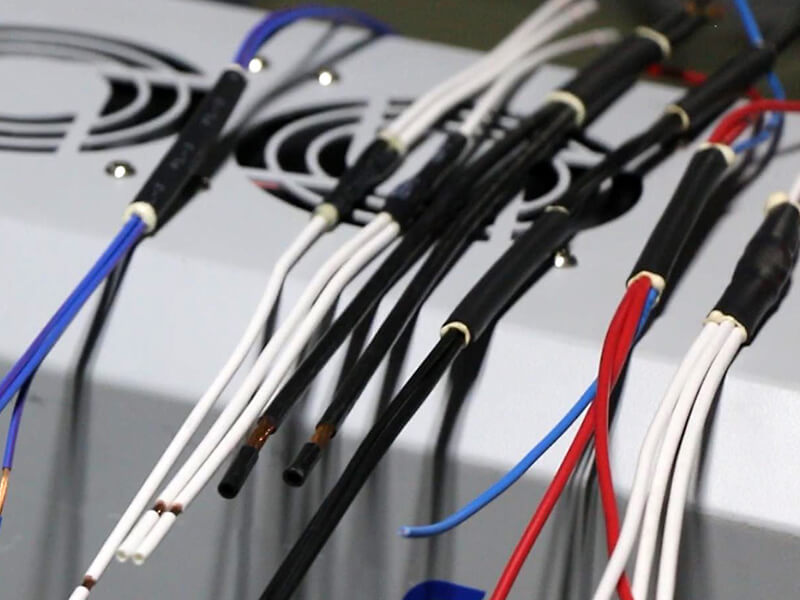
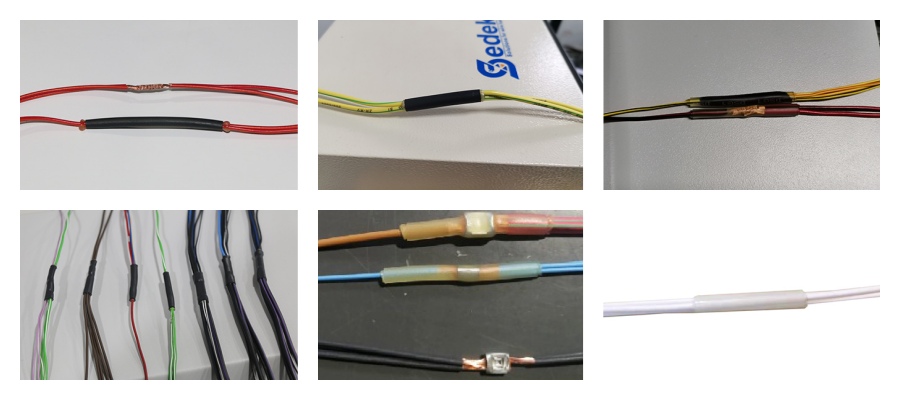
Long harnesses become difficult to process when operators must repeatedly reposition them around a fixed heat source. HSM-25M coordinates heating-cavity and harness-bracket movement, while HSM-120 provides X/Y module travel with up to 750 mm shrink distance. This supports multi-position heat shrinking along a controlled motion path.
Large cables need heating clearance, workpiece support and positioning matched to their geometry. Across the current range, Sedeke covers harness sections up to 240 mm² and tube diameters up to 50 mm. Dual-station or moving-module structures and workpiece-specific fixtures provide a defined route for large harness heating.
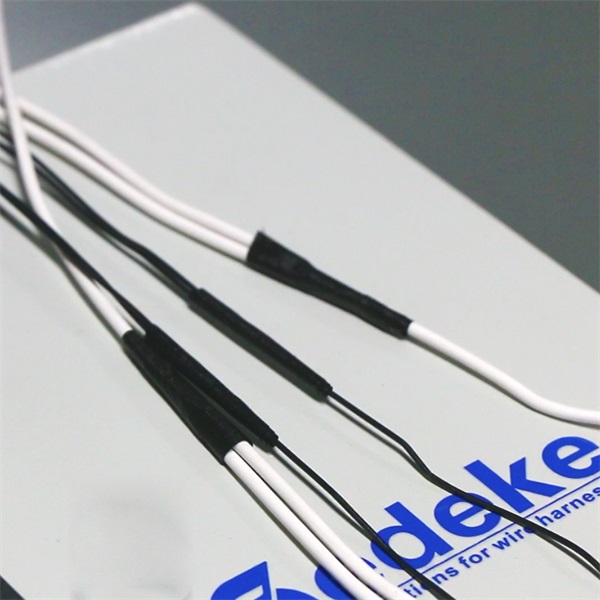
Include the cable OD, structure, material, strip length, number of layers and target output.
Sedeke has over 25 years of extensive experience in the field of industrial automation wire harness processing. The company operates three R&D and production bases and four major processing plants in Jiangsu and Zhejiang, China, and maintains technical support centers in Europe and Southeast Asia. Its products are sold in more than 50 countries and regions worldwide, and the company has registered its trademarks in nine countries, including Germany and India, demonstrating a mature global supply chain and service capabilities.
The company boasts a technically proficient and experienced R&D team, with a product line that comprehensively covers cutting, stripping, crimping, winding, and fully integrated automated equipment. In addition to offering a series of standardized rubber/plastic wire harness processing machines, Sedeke provides customized wire harness processing solutions that are innovatively optimized and perfectly tailored to meet specific customer requirements.
Sedeke’s equipment and technologies are widely used in high-end manufacturing industries such as automotive wiring harnesses, new energy, rail transit, aerospace, home appliances, power and telecommunications, and medical devices. They help drive the intelligent transformation of factories and serve as a reliable partner brand for industrial support.
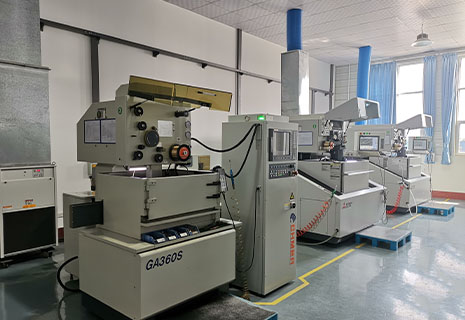
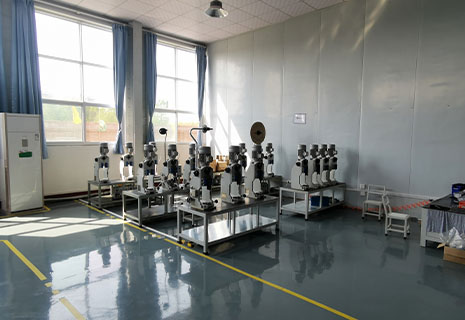
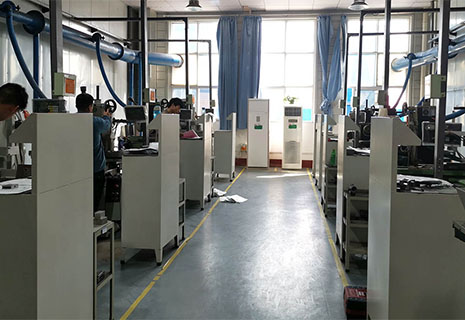
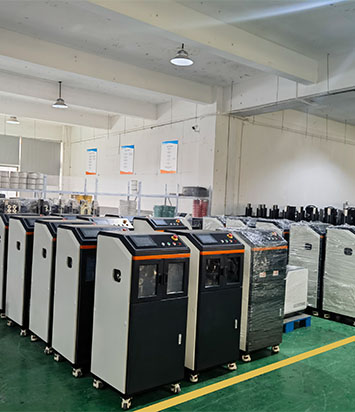
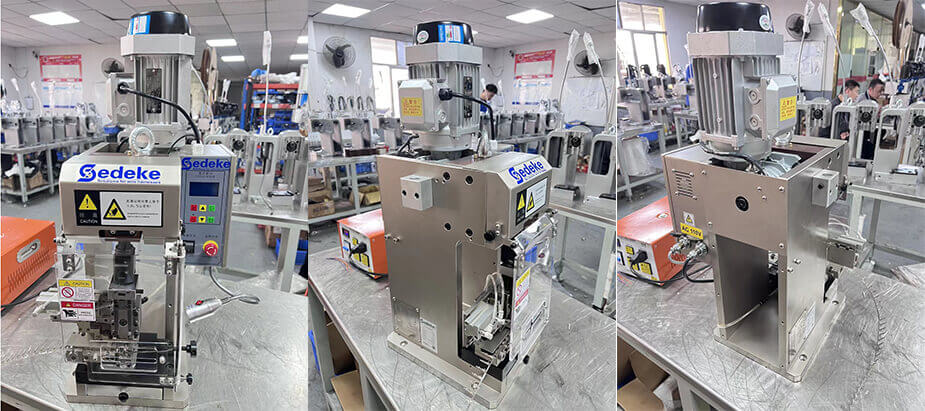
A heat shrink tubing machine applies controlled heat to tubing already placed over a wire, crimped terminal, splice or connector. The tubing recovers around the assembly as temperature and exposure are controlled. It heats the positioned tube; cutting the tube and placing it on the harness are separate operations unless other equipment is added.
Choose by shrink position and workpiece movement first, then confirm tube diameter and length, harness cross-section, heated distance, electrical supply and fixture requirements. Compact local machines suit short sleeves, belt machines suit consistently spaced batches, and moving-module systems handle middle, end or multiple positions on longer or larger harnesses.
Local heating places one or two harnesses inside a compact heating cavity. Belt heating moves repeated workpieces through a fixed heated path at an adjustable speed. Moving-module systems keep the harness supported while programmed movement brings one or several shrink positions through the heat. The best route depends on workpiece geometry and production flow.
TM-15SC and TM-20SCS both list an AWG 32 to 18 wire range and a 1 to 10 mm stripping length. TM-15SC uses pneumatic stripping, while TM-20SCS is the servo stripping and crimping machine direction. The terminal, required press capacity, feed direction and tooling still determine the final choice.
Yes, selected Sedeke machines cover these tasks. HSM-90 and HSM-90S support larger harnesses through dual-station, fixture-based processing. HSM-25M handles middle or head positions with coordinated movement. HSM-120 supports harness sections up to 240 mm², tube OD up to 50 mm and shrink travel up to 750 mm for large cable heat shrinking.
Selected models list 485, network/internet or USB interfaces, MES connection direction and 14-day temperature-data storage. These functions can support an MES heat shrink equipment configuration and production review. Available protocols, data points, export format and integration scope must be confirmed for the specific model and ordered configuration.